LIFE Science Hub — evidence-based science communication

In this Hub you can search for scientific articles created by professionals on topics concerning nutrition, nutraceuticals, health and lifestyles in general.
The authors of the editorial team are qualified biologists, each identified by an ORCID profile and with proven editorial experience in the relevant sector. Every article published on the Hub is identified by a DOI and accompanied by a complete and rigorously structured bibliography, with authors, year of publication, original title, scientific journal and clickable DOI, to guarantee transparency and traceability of sources.

LIFE Science Hub was born to spread medical-scientific knowledge to the general public without compromising its rigor and authoritativeness: through the innovative EFV (Easy Friendly Version) format our Hub indeed translates scientific research into clear and understandable content, also with the new support of video articles by the authors.
An independent editorial organization, free from public funding and from the interests of large industrial groups.

This content is for informational purposes only and does not replace medical advice — see the scientific method

Latest articles

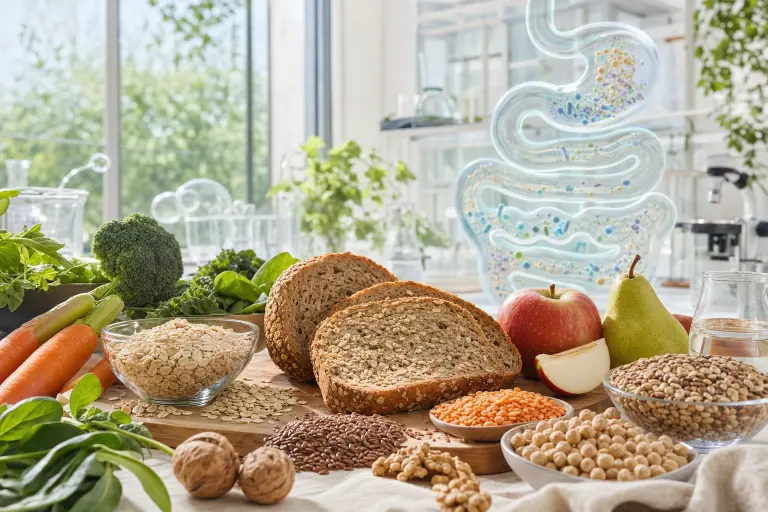
Still life of fiber-rich foods with a reference to the intestine and microbiota, in a bright and realistic editorial scene.

Dietary Fiber: What It Is and Why It's So Important Today

Dott. Armando Colonnese and Roberto Panzironi; Last updated: August 2026

In brief: Dietary fiber is one of the most important topics in modern nutrition, as it links diet quality, gut health, and metabolic prevention. The term dietary fiber refers to plant-derived components that resist, to varying degrees, digestion in the small intestine—the part of the intestine where most nutrient absorption occurs—and reach the colon, where they can be fermented by the gut microbiota, the community of microorganisms living in the intestine, or eliminated almost intact. This definition, however, is not enough to explain why they are so relevant today. Fibers do not act in just one way: some are soluble, meaning they dissolve in water and form solutions or gels; others are insoluble and primarily increase fecal bulk; some are viscous, meaning they can thicken intestinal contents and slow down nutrient absorption; others are fermentable and promote the production of short-chain fatty acids, molecules involved in the dialogue between the intestine, metabolism, and the intestinal barrier. This is why talking about fiber means talking about post-prandial glycemia (blood sugar after a meal), satiety, LDL cholesterol, bowel regularity, and overall diet quality. Their importance has also grown because modern diets, often more refined and poor in minimally processed plant foods, tend to reduce their intake. In practice, fiber is a useful indicator of a meal's structure and its physiological impact: not only the quantity matters, but also the source, food processing, and individual tolerability. The main sources remain legumes, whole grains, fruits, vegetables, seeds, and nuts—foods that provide not only fiber but also a more favorable nutritional matrix compared to ultra-refined products. International guidelines recommend an intake of at least 25 grams of natural fiber per day for adults, emphasizing that the benefit does not depend on a single isolated nutrient but on the overall dietary pattern [1][2]. Further on, we will see how fibers are classified, how they act on the intestine, glycemia, lipids, and satiety, which foods are richest in them, how to increase them without bloating, and what science truly says about their properties. In summary, the key points we will explore are the following:
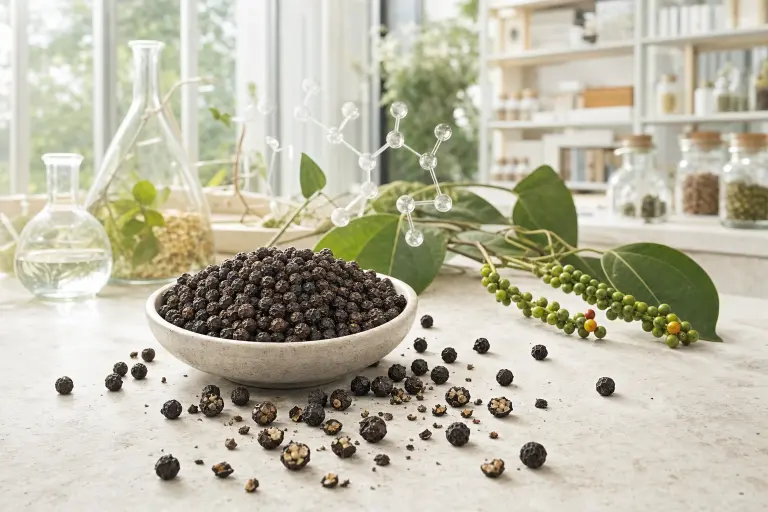
Peppercorns, Piper nigrum leaves, and cracked grains in a bright scientific still-life showing black pepper’s bioactive matrix.

Black pepper and its intrinsic properties

Dott. Armando Colonnese and Roberto Panzironi; Last updated: September 2026

In brief: Black pepper is much more than a table spice: it is an ancient ingredient, widespread throughout the world and now observed with increasing interest by research for the presence of bioactive compounds, in particular piperine, which is the most studied pungent molecule within it. In fact, when we talk about black pepper, we are not only referring to the strong flavor that enriches dishes, but also to a complex food matrix, capable of interacting with various biological processes. For this reason, the topic is relevant both for those looking for practical information on daily cooking and for those who want to understand what science really says about its possible properties. In the nutritional field, black pepper is often studied for its potential role in bioavailability, i.e., the amount of a substance that reaches circulation, in energy metabolism, in inflammation and oxidative stress, but it is important to distinguish precisely between what is supported by experimental evidence, what emerges from clinical studies, and what remains a hypothesis to be verified. The difference between whole spice and concentrated extract is also central, because it changes the amount of piperine available and, consequently, the meaning of the observed effects. An often-overlooked aspect is the natural variability of piperine content, which can change based on species, origin, harvesting, and processing, making black pepper a less uniform object of study than it seems. Furthermore, its scientific interest does not only concern digestion or taste, but also the possibility that some of its components influence broader cellular signals, such as those related to energy response, inflammation control, and the maintenance of metabolic balance. In the following paragraphs, the reader will find an organized guide that starts from the identity of black pepper and arrives at its most discussed applications, passing through the mechanisms of action, possible metabolic effects, safety of use, and limitations of available evidence. The goal is to offer a clear, scientific, and understandable reading, useful for navigating without oversimplification and without excessive promotion. In summary, below are the key points we will explore:

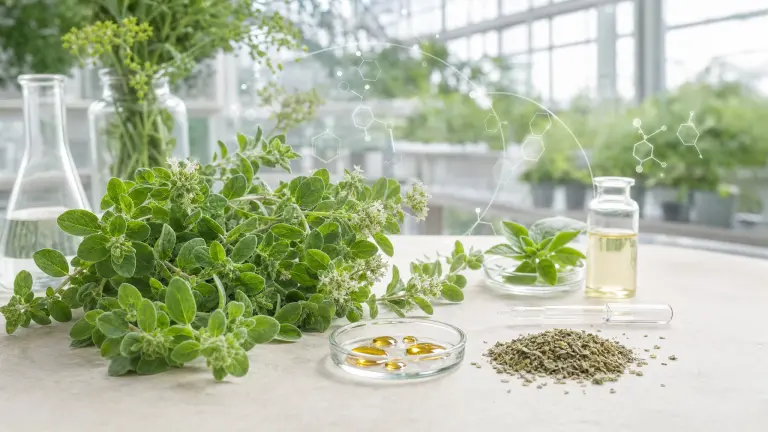
Fresh oregano with drops of essential oil and molecular references, in a bright botanical-scientific context that evokes preclinical benefits and caution in use.

Oregano, much more than a spice

Dott. Armando Colonnese and Roberto Panzironi; Last updated: September 2026

In brief: Oregano is much more than a fragrant spice used to flavor pizzas, sauces, and Mediterranean dishes. From a scientific perspective, interest in this plant stems from the presence of bioactive compounds—natural substances capable of exerting measurable biological activities, particularly carvacrol and thymol—which give it antioxidant, anti-inflammatory, and antimicrobial properties studied in numerous experimental models. For this reason, oregano is now viewed not only as a food ingredient but as a plant resource capable of interacting with key processes of metabolism and cellular balance, including oxidative stress (i.e., an excess of reactive species that can damage cells and tissues), chronic inflammation, insulin resistance, regulation of AMPK (a cellular energy sensor protein), and mTOR (a signaling pathway that controls growth and protein synthesis), and control of autophagy (the process by which cells recycle damaged or superfluous components). However, it is important to precisely distinguish between the culinary spice, essential oil, and concentrated extracts: these are very different forms in terms of composition, biological potency, and safety profile. This distinction is essential for correctly interpreting available data and avoiding excessive expectations. From a functional nutrition perspective, oregano is of interest because it can contribute to the quality of the dietary pattern and, at the same time, offer interesting insights for research on type 2 diabetes, inflammation, cardiovascular health, and cellular adaptation processes. In the following paragraphs, the article systematically explores the botanical and chemical basis of the plant, its main mechanisms of action, applications in various health areas, and the limitations of available evidence. Specifically, the article will address:

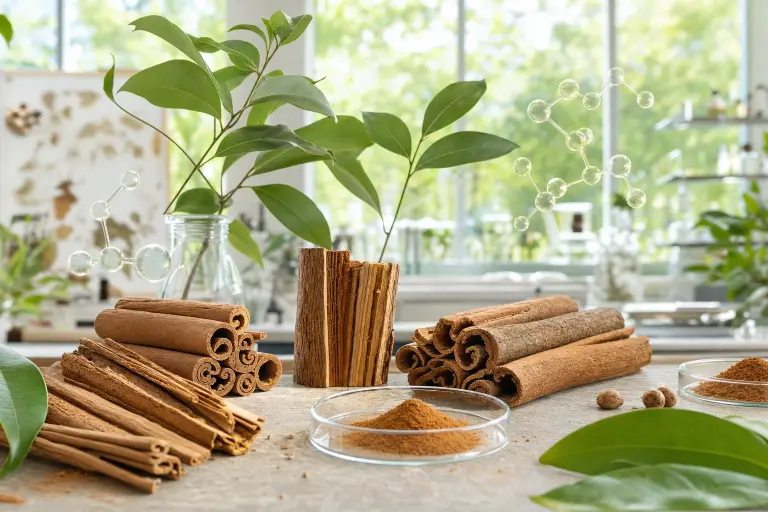
Cinnamon bark in a bright botanical-scientific scene, with discreet references to cinnamaldehyde, polyphenols, and coumarin.

Cinnamon: scientific evidence, mechanisms of action, and applications for human health

Dott. Armando Colonnese and Roberto Panzironi; Last updated: August 2026

In brief: Cinnamon is one of the most studied spices when it comes to functional nutrition, metabolism, and diet quality, as it combines a very ancient tradition of use with ongoing scientific interest. However, behind its warm aroma and sweet note, there isn't a simple or uniform ingredient: cinnamon is a complex plant material, obtained from the inner bark, which is the innermost layer of the trunk, of different species of the genus Cinnamomum. Among different varieties, there are real differences in the phytochemical profile, i.e., the set of molecules present in the plant, and in the potential biological impact. For this reason, talking about cinnamon requires precision. The botanical species, the concentration of active compounds, the commercial form, the method of use, and even how the study results should be interpreted all vary. This distinction is important not only for those who cook but also for those seeking reliable information on benefits, limitations, and safety. From a nutritional point of view, cinnamon is interesting because it allows food to be flavored with minimal amounts of energy, and in some contexts, it can promote a reduction in added sugars. Biologically, its relevance derives mainly from molecules such as cinnamaldehyde, polyphenols—plant compounds with antioxidant and regulatory activity—and eugenol, a natural aromatic substance studied for its possible physiological effects. These components have been analyzed for their possible role in glycemia, insulin sensitivity—the ability of cells to respond to insulin—oxidative stress, inflammation, and certain aspects of cellular control. This combination of botanical, chemical, and physiological aspects explains why the literature on cinnamon is extensive but not always uniform, and why a serious reading must distinguish between preclinical results—obtained in the laboratory or on experimental models—clinical observations, and practical applications. In the following paragraphs, the identity of the spice, the differences between the main varieties, the meaning of bioactive compounds, its role in the diet, and the available evidence on cellular mechanisms and possible metabolic implications will be clarified. In summary, the key points we will explore are:

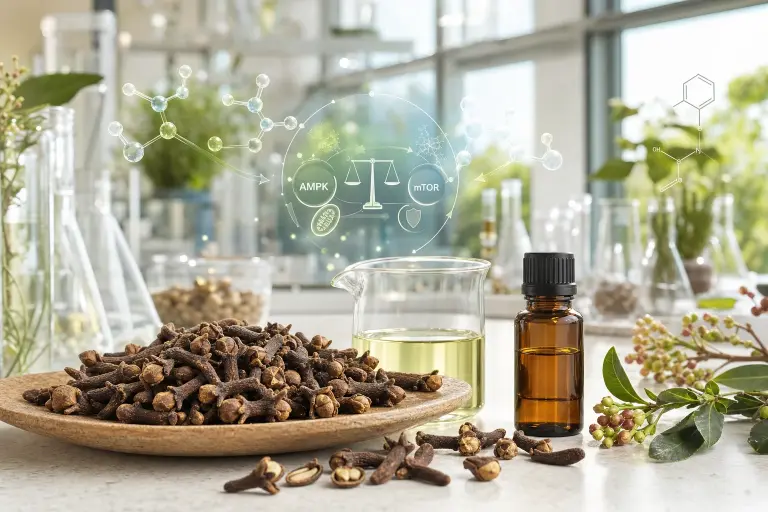
Cloves with references to eugenol and metabolic regulation, in a bright and realistic scientific scene.

Cloves, Eugenol, and Metabolic Regulation: Properties, Supplementation, and Uses in Chronic Diseases.

Dott. Armando Colonnese and Roberto Panzironi; Last updated: September 2026

In brief: Cloves are an ancient, intense spice surprisingly rich in active compounds. In food contexts, they are appreciated for their warm, pungent aroma, but in recent years they have also attracted interest in nutritional and biological fields due to the presence of eugenol, a phenolic molecule—that is, a plant substance with chemical properties typical of phenols—which represents one of the main constituents of their functional profile. When talking about cloves, however, it is important to distinguish between culinary use, extract, and essential oil, because concentration, exposure, and biological potential are not equivalent. This distinction is central to correctly interpreting studies on glycemia, inflammation, oxidative stress, hepatic metabolism, and cellular regulation, without overestimating the effects of a spice that remains primarily a food and only in some cases a possible basis for more concentrated formulations. In the context of metabolic regulation, cloves are studied mainly for their interaction with mechanisms such as insulin resistance, i.e., the reduced ability of tissues to respond to insulin, AMPK, a protein that functions as a cellular energy sensor, mTOR, a signaling pathway that regulates growth and protein synthesis, autophagy, the process of recycling cellular components, and glucose uptake in peripheral tissues. However, the available literature is heterogeneous: many data are preclinical, while human evidence is still limited and should be interpreted with caution. This article guides the reader clearly through properties, integration, possible applications in chronic diseases, and safety aspects, to help understand when cloves make sense in the diet, when they are discussed as nutritional support, and when it is better to pause for a prudent evaluation. Specifically, the article will address:

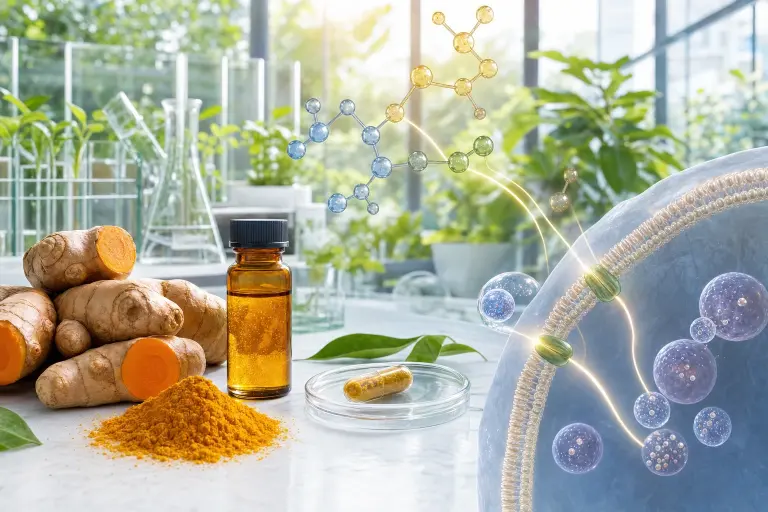
Curcumin metabolic pathway still life with turmeric, AMPK, mTOR, and GLUT4 conceptually linked to glucose uptake and insulin resistance.

Turmeric, Insulin Resistance, and the Metabolic Journey

Dott. Armando Colonnese and Roberto Panzironi; Last updated: September 2026

In brief: The relationship between turmeric, curcumin, and metabolism has become one of the most discussed topics in nutritional science communication in recent years, as it intersects three very current interests: the prevention of glycemic alterations, the understanding of cellular mechanisms, and the choice of realistic dietary strategies. Turmeric is a spice derived from the rhizome of Curcuma longa, while curcumin is one of its main curcuminoids, which are the most studied bioactive compounds in scientific research. When discussing metabolic benefits, however, it is crucial to distinguish between the culinary use of the spice and the use of concentrated extracts, because doses, absorption, and context of use change significantly. In this article, we will see how curcumin is studied in relation to AMPK, a cellular energy sensor, mTOR, a pathway that regulates growth and protein synthesis, and GLUT4, the glucose transporter involved in insulin response. We will then delve into the meaning of insulin resistance, the value and limitations of scientific evidence, the role of bioavailability, and the practical precautions to consider when turmeric is included in the diet or supplementation. The goal is not to attribute miraculous power to the spice, but to offer a clear, prudent, and useful interpretation to understand where biological hypothesis ends and practical application begins. Specifically, the article addresses: